“Goodbye my Lover, Goodbye my Friend…”

SIKE!!

Yes I quoted James Blunt in my title, no I don’t care if you think it’s awful and NO I’M NOT LEAVING! Well, not for good anyway.

So this blog marks the final instalment of my mandatory writing for class this semester, and I’m going to take this opportunity for a little personal reflection on the whole process.

Surprisingly, I have actually really enjoyed this, I got to learn a whole whole of new facts, ideas and theories, I discovered new things about myself like how much time I spend on my phone and really got to analyse the way I learn, and also was forced to think about my knowledge of other cultures and modern technology.

However as exam season looms and I try to find out if i can successfully live off of red-bull and croissants for an entire week, I must put these lovely little babbles on pause for a while. I find that this process has been one of self discovery that also helped me to improves my research, learning and academic writing skills. (Okay the memes weren’t academic but the references were!)

I shall hopefully take these skills and put them into action in the coming semesters and hopefully I can begin writing again once I have some new knowledge and experiences to share with you all.

Until then my lovely readers, stay safe, be you, and a happy festive season!

Bye for now,

Amee x

“It’s those darn screens!”

Welcome back my lovely readers!

Today we are going to talk about social media addiction!! (Dun dun duuuuuunnn!!) Let’s talk about social media and young people, and the benefits and challenges that the rising use of the internet poses for language-learners like ourselves.

As everyone knows, young people and their social media addiction is the fall back topic these days for anyone who wants to have a nice argument over dinner. The recommended amount of time to be spent on smartphones and such devices is a maximum of 2 hours, any more and you’re doing harm to yourself.

Just by looking around wherever you are now, it is probably obvious that most of us spend more than the recommended amount of time looking at our screens, you have to to read this blog! But just how much more time are we spending on them? To test this out, I downloaded an app called QualityTime (nice guilt-tripping there 😑) this app is available for both Android and iOS and it measures not only the amount of time you spend looking at your screen, but also the number of times you pick up your phone everyday. (Don’t ask me how it measures these things, I prefer not to speculate…)

fbi-stands-for-friends-behind-internet_o_7211780

Okay but conspiracy theories aside! My snapshots from the app unfortunately aren’t working (Because why would they, its only my grades) but to summaries, over the course of two weeks I spent approximately 2.6 hours looking at my screen every day, and picked up my phone around 36 times! This is still below average according to the app despite being very high!

I find this statistic quite worrying, and I don’t know if I’m alone in that regard, but knowing that on average people spend up to four hours on their phone each day does give me concern for people’s personal interaction. Now while some of this may be education in nature, would it be better for students, in particular for students of language, to put down our gadgets and talk to each other?

Let me know what you think down in the comments below, then get off that screen and go outside!! 😉

Until next time,

Amee x

Corpus! “Corpse?!” No! Corpus!

Here we go again!

Welcome everyone and let’s dive straight in to today’s topic which is Corpus Linguistics and Concordancing. To be perfectly honest I don’t fully understand these topics but let’s do our best to explore them together.

In short, “Corpus Linguistics is now seen as the study of linguistic phenomena through large collections of machine-readable texts: corpora. These are used within a number of research areas going from the Descriptive Study of the Syntax of a Language to Prosody or Language Learning” (University of Essex, 1998)

What this means in very simple terms is that if you wish to study things such as word frequency or the use of discourse makers in a particular language, compiling a database of texts written by native speakers (a corpus) and analysing these is one of the best ways to do so.

Concordancing can also be used to analyse differences in language. I recently downloaded a concordance app called AntConc, in order to analyse the implications of translating the phrase “to make a decision” into Japanese (one of my target languages) The result was both intruiging and amusing as it translates to “問題は誰が決定を下すかということだ。” the literal translate of which is “the problem is who makes the decison” This has some rather interesting implications as in the English phrase, the question of “who” is not even remotely involved, whereas the Japanese trabslation makes it a central part of the phrase, and this makes for some very interesting analysis.

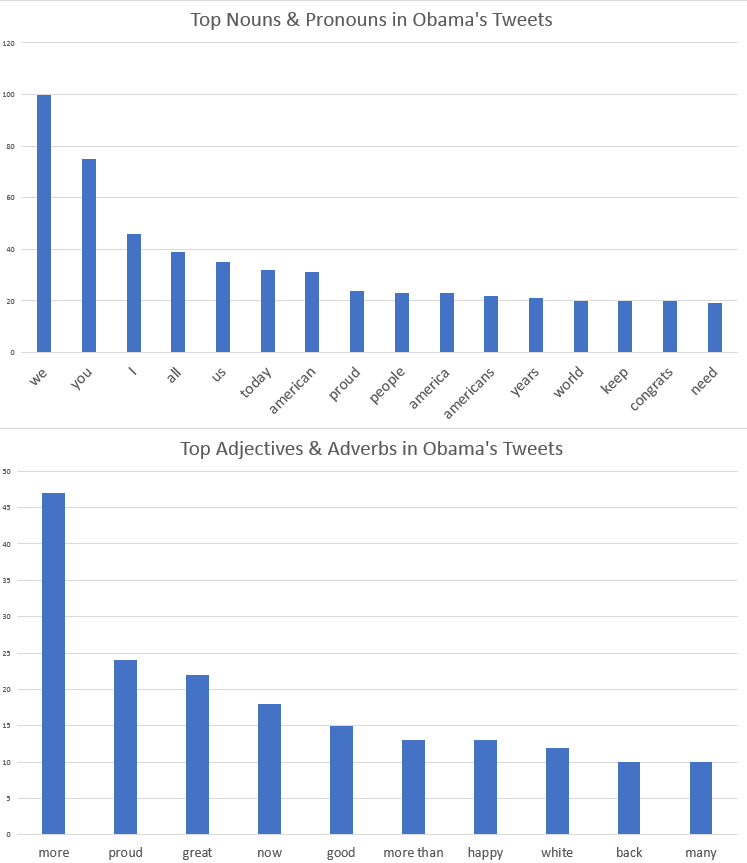
Concordance and corpus can also be used to analyse indivudual speech patterns. For example, the following is a small analysis of the word frqeuency in Barack Obama’s written corpus on social media.

ocn45gyn20xz

Corpus such as these are excellent resources from a linguistic and psychological point of view. We can determine the target audience and relative subject of the tweet just by looking at the adjectives and adverbs. Many linguists also carry out this work on a much larger scale.

What do you think of corpus and concordancing? Are they useful tools or just more of my babbling? Let me know in the comments below!

Until next time!

Amee x

IC You, IC Me, Let’s discuss some ICC!

Welcome back dear readers!

I truly hope you’re all enjoying my comedic titles because they’re not stopping…….ever….

Anyway onto today’s blog! Today we shall be looking at Intercultural Communicative Competence, or just ICC if you’re in a hurry. What it is, is it good or bad, and what benefits it has to the average language learner like you and me.

So what is ICC? Well according to TeachingEnglish.org (https://www.teachingenglish.org.uk/article/intercultural-communicative-competence) ICC can be defined as follows; “Intercultural communicative competence, or ICC, refers to the ability to understand cultures, including your own, and use this understanding to communicate with people from other cultures successfully.” 

So to put it simply, if you can understand cultures, then you can use this knowledge to communicate effectively with other people. Doesn’t sound too complicated right? Well let’s look at some of the analysis and theories grounding it. One of the main pieces of research around ICC is Bryam’s model of 1997. In this he states the five main skills/characteristics needed for successful ICC also known as the 5 savoirs. They are as follows;

  • Savoir Comprendre – Discovery/Interaction skills
  • Savoir Faire – Interpreting/Relating Skills
  • Savoir Etre – Attitudes
  • Savoir S’engager – Critical Cultural Awareness
  • Savoir – Knowledge

When we look at these skills in terms of the definition above, they really do make sense. You must first have knowledge and awareness of culture, you must be able to interact with and interpret this knowledge, and finally, you must have a good attitude for communication to be a success.

So what impact does this have on language learners and language education? The late 90s and early 00s saw a surge in the emphasis on ICC and cultural awareness in language education as globalisation moved to the forefront of societal awareness. (Bennett, 1993; Byram, 1997, 2008; Deardorff, 2006, 2009).

As a learner of numerous foreign languages, I can attest to the fact that language learning has definitely made me more aware and knowledgeable about other cultures and peoples. This also con-inside with Bryam’s testimony that “It is a widely held assumption among teachers and educational policy makers that foreign language learning creates greater tolerance and understanding of foreign people and their cultures or ways of life”. (Byram, 1991: 11)

What do you all think? Let me know your thoughts about ICC and its potential advantages for language learners in the comments below!

Until next time!

Amee x

Literate? Illiterate? What’s the difference?!

Bonjour mes amis!

Welcome back to another blog! Its that time again where I try to explain very interesting concepts that I have learned about in an academic way…but ultimately end up confusing all of us and turning everything into one big internet meme! 😀

However I will try to be more professional this week as today’s topic requires a little more sensibility and attention. What is that topic you ask? Digital literacy!

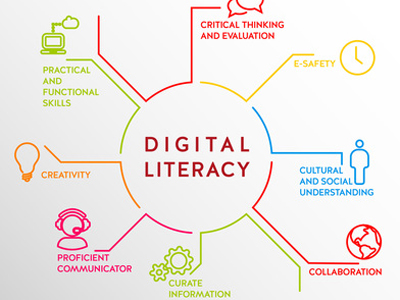
In the most basic sense, as most of us know, the most simple definition of being “literate” is having the ability to read and write, or having basic use of language. However a more theoretical definition might be that “Acquiring literacy does not involve memorizing sentences, words or syllables … but rather an attitude of creation and re-creation, a self-transformation producing a stance of intervention in one’s context.”  (Paulo Freire, Education: The Practice of Freedom (1973) )

While these are both wonderful explanations of linguistic literacy, today we are going to discuss digital literacy. What is is, who is literate, and does it have any real standing in today’s society.

Now, I vould attempt to explain digital literacy in my own words, but I honestly believe it would be confusing and probably take me all day, so to give credit to some experts (who actually undertsand all this) I shall give you this definition;

Digital literacy is;

Cognitive, emotional and social competencies that include:

  • the use of texts, tools and technologies
  • the skills of critical thinking and analysis
  • the practice of message composition and creativity
  • the ability to engage in reflection and ethical thinking
  • active participation through teamwork and collaboration.

From: Digital and Media Literacy: A plan of action. (Hobbs, 2011)

I short, being digitally literate not only means be able to use the basic functions of technology and digital tools such as websites, social medias and other digital tools, but also being able to use their advanced features, and use them for your own unique purposes. A very simple example of this would be having the ability to use all the advanced design functions of this website to create your own blog!


c7aa566e56da8c8b076cf7c2a2cfc720--best-food-recipes-cookie-recipes


So, does that make me a so-called digital native? Or am I what is known as a digital immigrant? Well according to Prensky (2001) I am a digital native,a s I was born into a time that was full of new and wonderful technology and has full use of these tools throughout my life (We didn’t have our first smartphones however until I was about 12!) My father on the other hand, would be considered a digital immigrant, as he was born in the 1970s, long before many of the current technological wonders have surfaced. (The man still can’t use Facebook bless him.)

How does this affect digital literacy? Are all digital natives inclined to be more,iterate than immigrants? Or is our ability subject to the time and effort we put into learning and familiarising ourselves with technology? (Benini, 2013)

What do you all think? Let me know your thoughts in the comments. Are you a native or an immigrant? Does it matter at all? I’d love to hear your thoughts!

Until next time!

Amee x

Susan, PLEs I Beg!!

Hello everyone! (I need to start using real titles instead of memes…)

final_5c0a4d77392956001299f8dd

Anyway, today we are going to talk about PLEs! Now apart from fitting perfectly into a classic bit of internet humour, PLEs are actually something rather new and wonderful; Personal Learning Environments. In short, they are open platforms where the user has the freedom to choose the tools that are relevant to their needs or interests. (Atwell, 2008 & Hakkinen & al. 2014)

So what exactly does it mean to personalise your learning? How do we do it? And is it a good idea or a bad one? Well, let’s begin with yours truly 😉

According to a recent study I took that was designed by North Carolina State University, I am an “Active” and “Intuitive” learner. What this essentially means is that it is easier for me to learn topics that are more theoretical and allow me to discover new possibilities, and the way that I learn best is by discussing, trying and explaining. So how would I personalise the way that I carry out my learning so that I can make the most of these personal traits? Well according to (Felder and Brent, 2016) active learners benefit from discussions and problem-solving, to which I can personally testify.  Therefore, I believe that using apps such as Duolingo and HiNative, which allow you to take tests and engage in conversations with native speakers, are hugely beneficial to my learning style.

I would like my learning process to be as personalised as possible. I believe that the more personalised that my learning is, the more effective it will be and as a result of this, my positive progress will motivate me to continue learning.

I suppose the next logical question to ask is what are the advantages and disadvantages of such personalisation? Well the advantages are very clear, to personalise your learning means to ensure that your learning need are met and that you are working in an environment that is as productive as possible. However are there any disadvantages? Now, while I can’t think of many, the only one that really comes to mind is the possibility of closing yourself off to new techniques. If you over-personalise your learning and remain to rigid in that structure, you may miss out on new, alternative methods of learning that could help you to improve and perhaps expand your learning capabilities.

Of course, all this is theoretical and open to interpretation. Let me know your opinions in the comments and I have also put the link to the NCU learning traits test below, in case any of you want to find out what your learning style is!

http://www.engr.ncsu.edu/learningstyles/ilsweb.html

Until next time,

Amee x


Let’s Talk about CALL, Baby!

Hellooo! (Is it me you’re…ahem anyway!)

Hi everyone! I’m back and it’s time to talk about CALL! What is CALL? Well the acronym stands for Computer Assisted Language Learning  and it’s the newest up and coming hot-shot technique in the world of language education.

As the world moves forward into the increasingly digital age, and we yearn for more connectivity, learning languages is becoming increasingly popular, and inevitably, we have tried and tested many ways of using technology to help us with our language learning. Therefore, many new apps and digital platforms have come into the fore in recent years that promise to have you speaking fluent “Insert target language here 😉 ” faster than you can say “Grammar notes”. However, it is my personal experience that such apps and platforms always lack something, and what one app has, another will lack and so on.

picc

So with that in mind…let’s discuss my personal CALL wish-list! If I could design a CALL platform or app, what would it look like? What do I think would make the best language learning app possible? Let’s find out!

Visual Aspects


Although perhaps not the first thing that some may think of as important, I believe that any learning tool should be visually attractive and well laid out. According to Nokelainen (2006: 181) learning and the process of such is not a quantifiable concept, however I do believe that for many, an attractive visual aid not only entices and encourages a higher rate of programme usage, but also helps learners to retain the information that they learn.

Variety of Options


Many CALL platforms that I have used sometimes isolate themselves to a small number of languages, or provide more resources for certain languages over others. As a student of languages, I adore learning them, and believe that a wide variety of options is key to learning more about languages in general, and for keeping users interested.


Personalised Progress Checks

The very thought of exams or tests is enough to send shivers down the spine of any current or past students. However its important to map your progress when learning a language, it helps you to keep track of what you have done, and can also be a good motivator when you see how far you’ve managed to come. Therefore, I think it would be wonderful if more CALL packages could allow you to personalise how you track your progress; For example, allowing you to pick which skills you work on in an exercise, or letting you design  assessments to focus on one particular grammar point, and giving you small achievements along the way to keep you motivated. For as we all know, motivation is the key to continuation.

In short, most of the CALL packages that I have used in the past have done their jobs; they have helped me improve my language skills and I cannot fault them on that. However, I feel that the above points could make all the difference in turning something good, into something great!


Until next time,

Amee x


Technology, Languages and Me.

The Limits of my Language means the Limits of My World – Ludwig Wittgenstein

Bonjour, Hola and Kon’nichiwa!

Hello everyone and welcome! My name is Amee and I’m a second year Applied Languages student at the University of Limerick in Ireland. In this blog, I am going to explore my passion for languages, different cultures and how technology influences modern language learning; starting with my own personal experiences.

As a language learner in the 21st century, I am constantly surrounded by technology. Smartphones, television, the internet and so on. Sometimes, it can be difficult to escape the burning desire to be distracted by Facebook or Netflix, however I and many others like me have found ways to turn these distractions into aids, which help and support my language learning.

As a beginner in Spanish studies, one of my greatest aids is the app Duolingo. This is a language learning app that allows users to test their competency and slowly advance through different learning stages. While is praise this app in its ability to cater to different levels and learning speeds, the consistency of the exercises can sometimes become rather monotonous, as there is little to no change in how the learner advances. Therefore although the app is excellent for both beginners and advanced learners, the monotany of repeating the same exercise over and over, can discourage one from continuing the language learning process.

Unlike Duolingo, Netflix offers a far more fun and enjoyable learning experience, to help me with my studies in advanced French, I often watch movies or series in French, either with or without the subtitles. This is an excellent resource as it offers the learner an experience that is fun, enjoyable and far less stressful than constant tests and exams. However is does present the danger of the learner becoming somewhat lazy in their approach to learning, and heading back to the old ways of allowing technology to distract us from our goals.

My study of Japanese is in a league of its own, with the amount of work that is required and the small number of resources in Ireland compared to European languages, the internet and online resources have become an invaluable part of my learning. In order to ensure that learning this new and complex language is both fun and rewarding, I often turn to YouTube to find new and innovative ways of learning a language. In particular, a channel called “Japanese From Zero” has been extremely helpful. Out of all the mediums I use, this is my favourite as the learning is interactive and unconventional, yet also practical and comes from someone who is not a native speaker of Japanese, and therefore understands the many complications that learners can encounter.

Finally, one of the digital platforms that I use most often is Google Translate. This online translation software is excellent for single word or phrase translations, however I would strongly advise against using it to translate full sentences. This is because the software fails to take context of colloquialisms into account, and can often leave with with a translation that is slightly off, or sometimes even completely wrong.

I considered many criteria when deciding which platform was my favourite. They included; how well the platform catered for different levels, how easy the platform was to use, how enjoyable the experience was and also if the platform was able to maintain my interest. With all these factors considered, YouTube became the clear favourite for me and my language learning journey.

Thank you for reading!